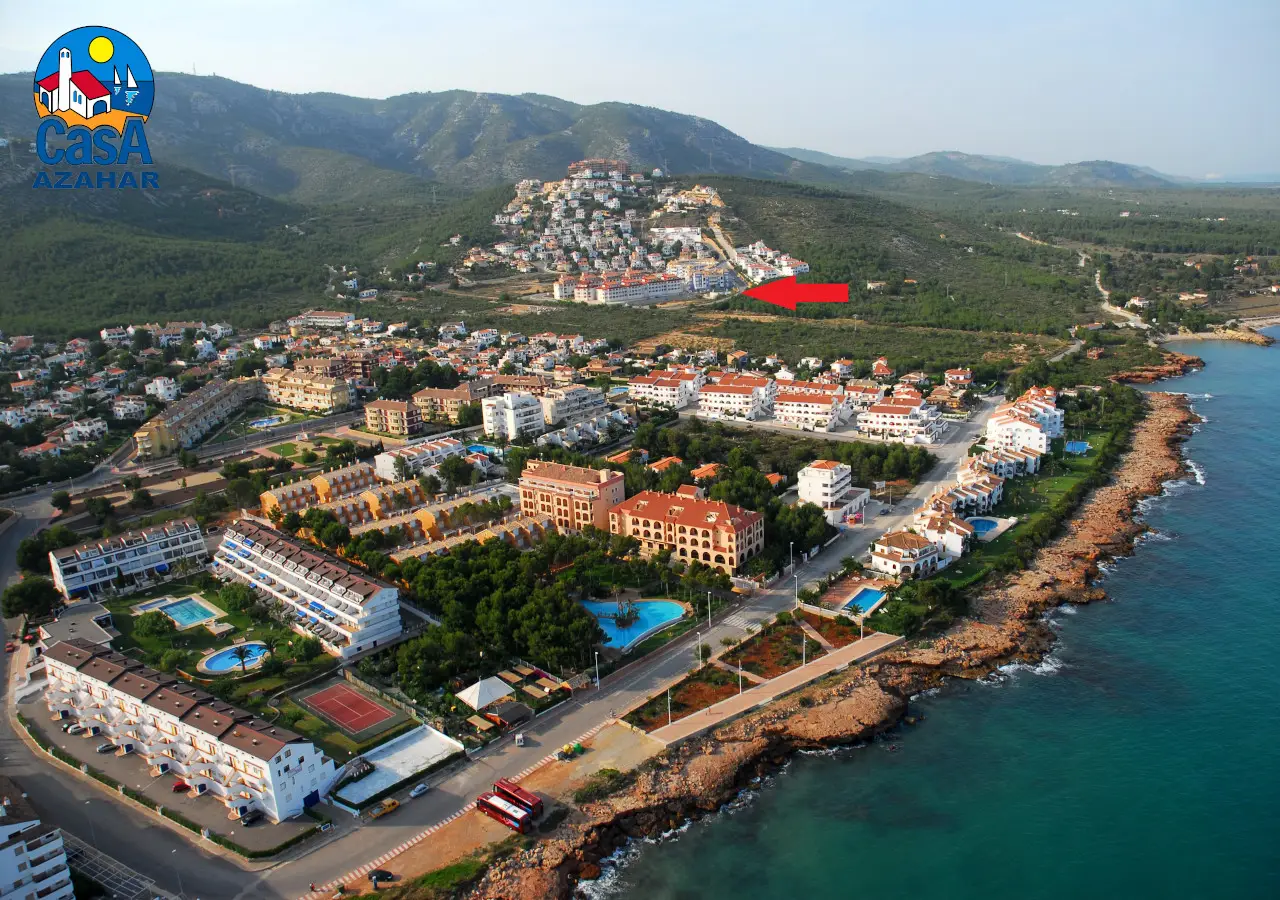
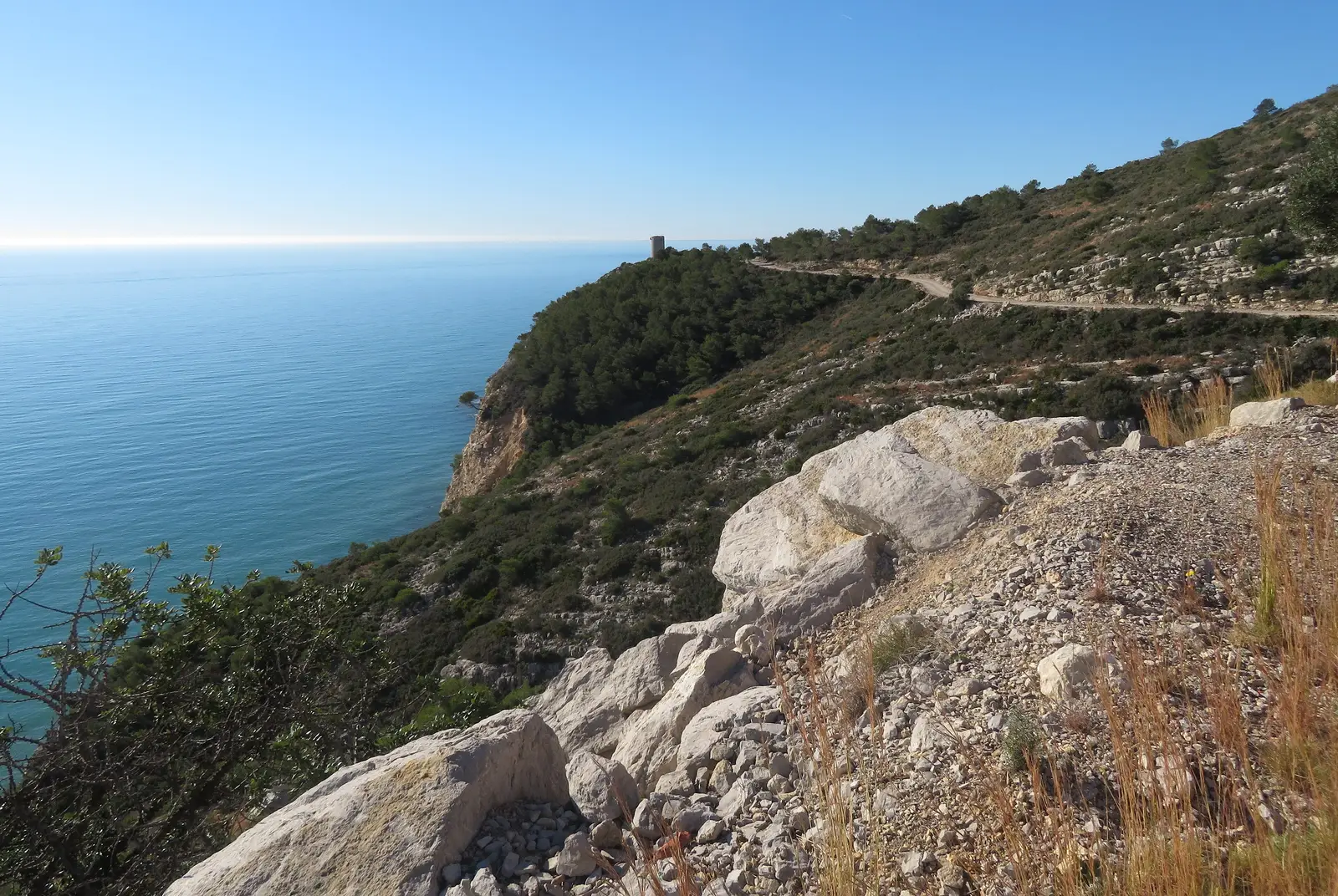
The Sierra de Irta (in Valencian, Serra d'Irta) is the Serra d'Irta Natural Park: a coastal range about 20 km long that drops straight into the Mediterranean between Alcossebre (Alcalà de Xivert, Castellón) and Peñíscola. Turisme Comunitat Valenciana describes it as "one of the last unspoilt mountain ranges on the Valencian coast", and that's exactly what makes it special: pine woods, dwarf palms, cliffs, pebble coves and watchtowers, with no buildings on the seafront.
The Marcomar Apartments, at the foot of the Serra d'Irta
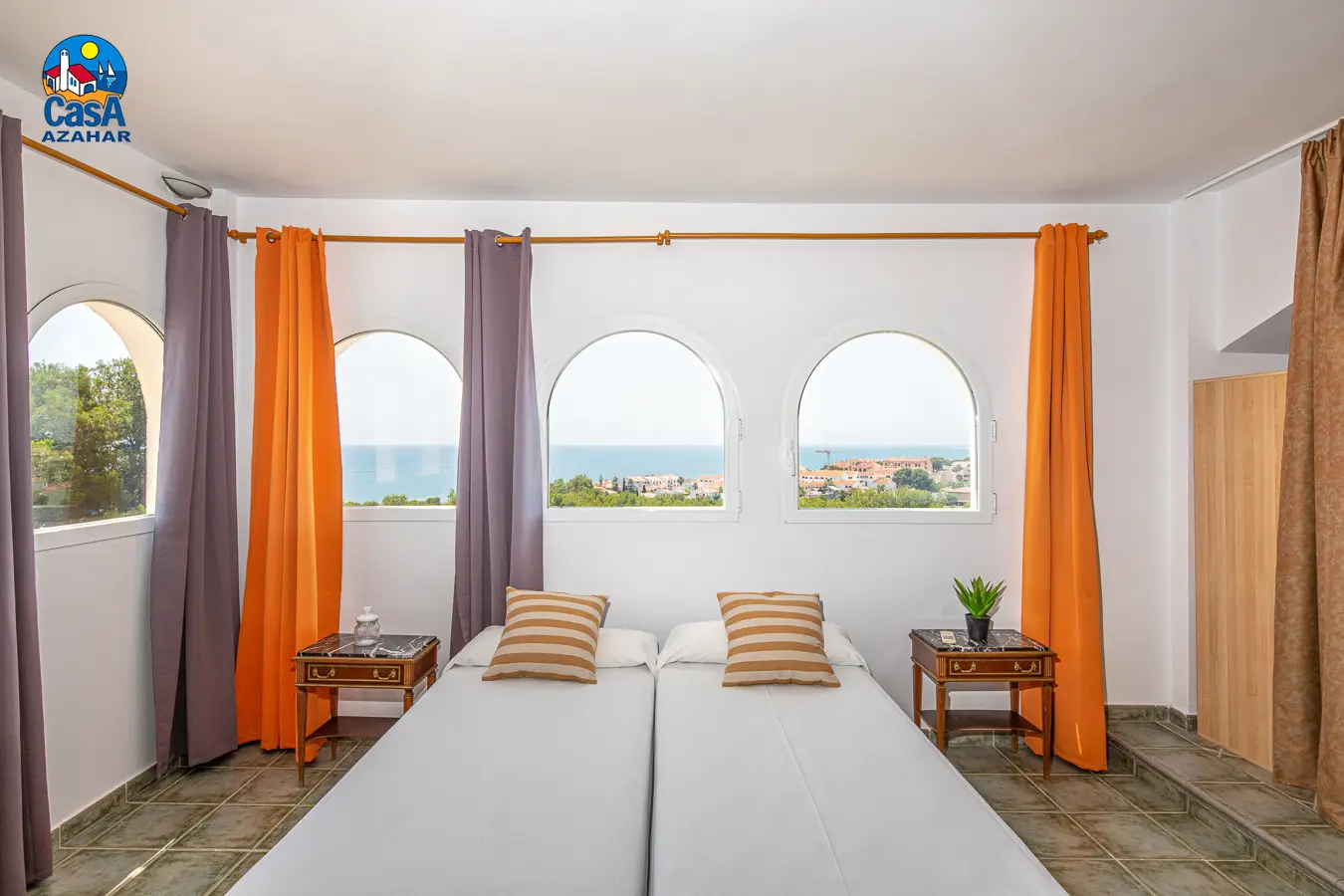
The Marcomar Apartments are on the Marcolina estate in Alcossebre, on the slope that climbs towards the Serra d'Irta, 1.3 km from Las Fuentes beach. Many terraces look out to sea, and the hills begin right behind the complex: the perfect base for exploring the park on foot or by bike and getting back to the pool in the afternoon.
- Adult pool and children's pool, open from Easter week to 15 November.
- 1-, 2- and 3-bedroom apartments, for 4, 6 or 8 people.
- Sea or hill views, depending on the apartment.
- Paid covered parking, with the park entrance at the lighthouse and Cala Blanca just a few minutes away.
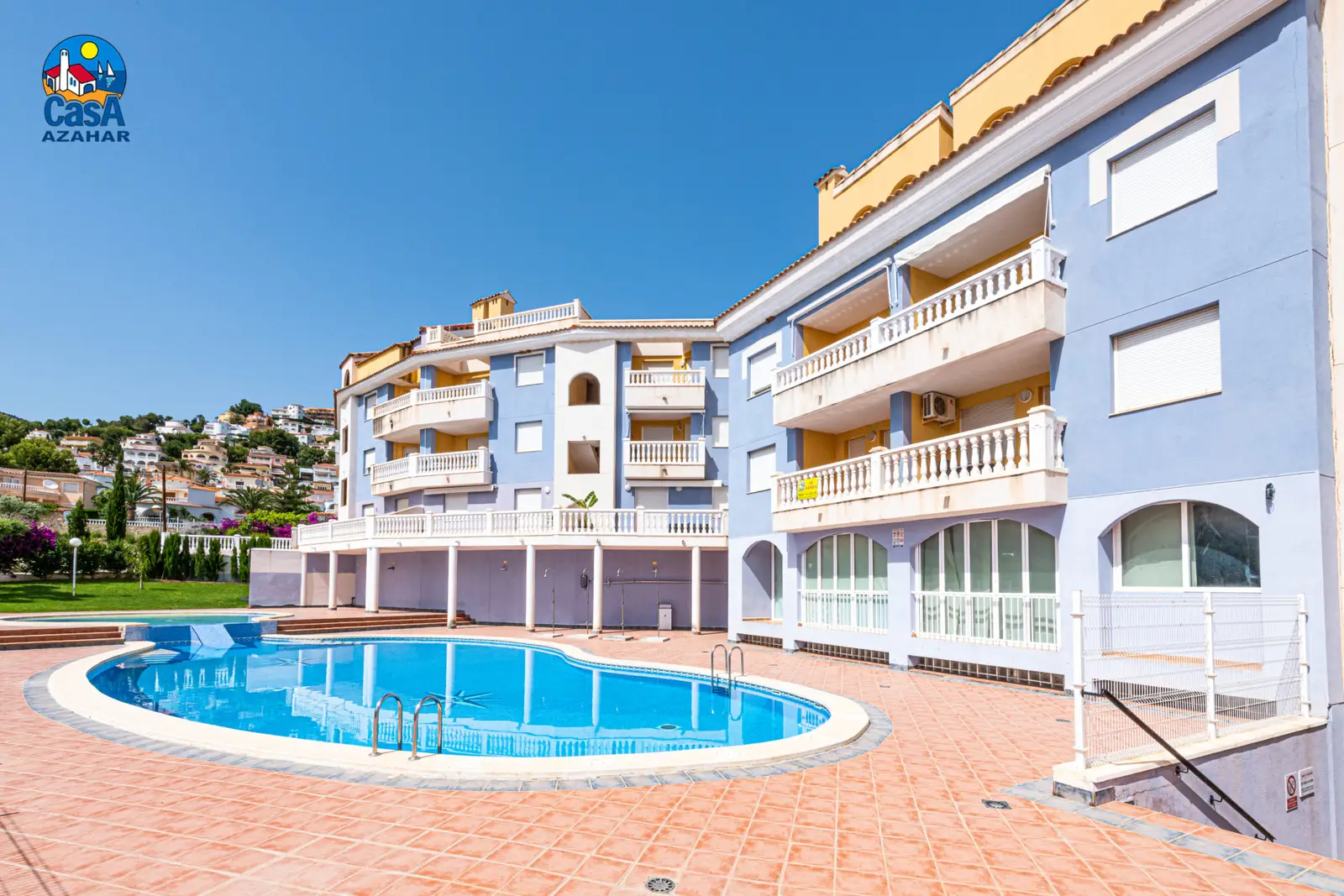
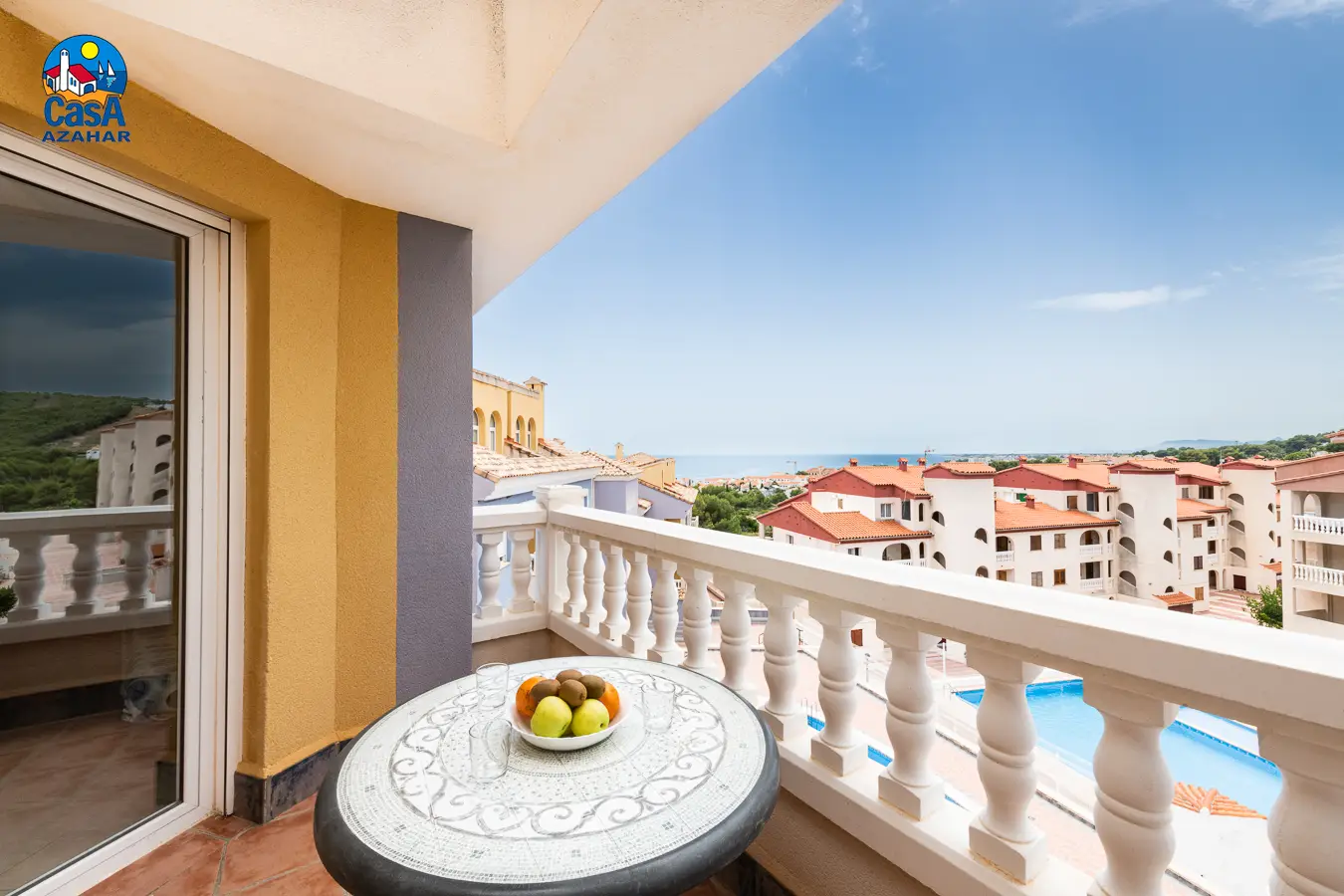
They're let through Casa Azahar, the local agency that manages them. You'll find all the details in where to stay in the Serra d'Irta.
Check availability at Marcomar
The Serra d'Irta in a minute
The Valencian regional government declared the park on 16 July 2002 (Decree 108/2002), as both a Natural Park and a Marine Nature Reserve. It protects 7,743 hectares of land and 941 hectares of sea, from the mouth of the Malentivet ravine, at Cala Mundina, to the Volante ravine. Its highest point is the Pico de Campanilles (572 m), just 4 km or so from the shore. Between 70,000 and 80,000 visitors explore it every year.
Alcossebre is its southern gateway. From the lighthouse and Cala Blanca, the dirt coastal track sets off through the park to Peñíscola, and the main walking and cycling routes start from there.
What you'll find in this guide
- The natural park in depth: geology, plants (dwarf fan palm, Aleppo pine, micro-reserves), wildlife (Audouin's gull, Bonelli's eagle, red squirrel) and heritage: Torre Badum, Torre Ebrí, Xivert and Pulpis castles and the Santa Llúcia i Sant Benet hermitage.
- Walking and mountain bike routes: the park's official routes in a table, with distances, difficulty and starting points, including the Ruta del Cranc along the coastal track (13.2 km).
- The Serra d'Irta coves: from Cala Blanca and Cala Mundina, in Alcossebre, to Cala del Volante, in Peñíscola, listed from south to north with the warnings worth knowing.
- Getting there and parking: road access, the summer restrictions on car access and the visitor centre.
Why stay at the entrance to the park
If you're coming to walk, cycle or simply gaze at the sea in peace, sleeping next to the hills transforms the trip. You can set off early, when the light is best and it's cooler, come back for lunch and head out again in the afternoon. In summer, what's more, cars are only allowed onto the park's coast with a booked space, so having the hills on your doorstep is a real advantage.
That's why we recommend the Marcomar Apartments: they're right at the park's southern entrance.
When to visit the Serra d'Irta
Spring and autumn are the best times for walking: mild temperatures and quiet paths. In high summer the heat is fierce on the unshaded routes; set off at dawn and carry plenty of water. Alcossebre gets more than 2,700 hours of sunshine a year, so even in winter there are lovely days for exploring the coast.