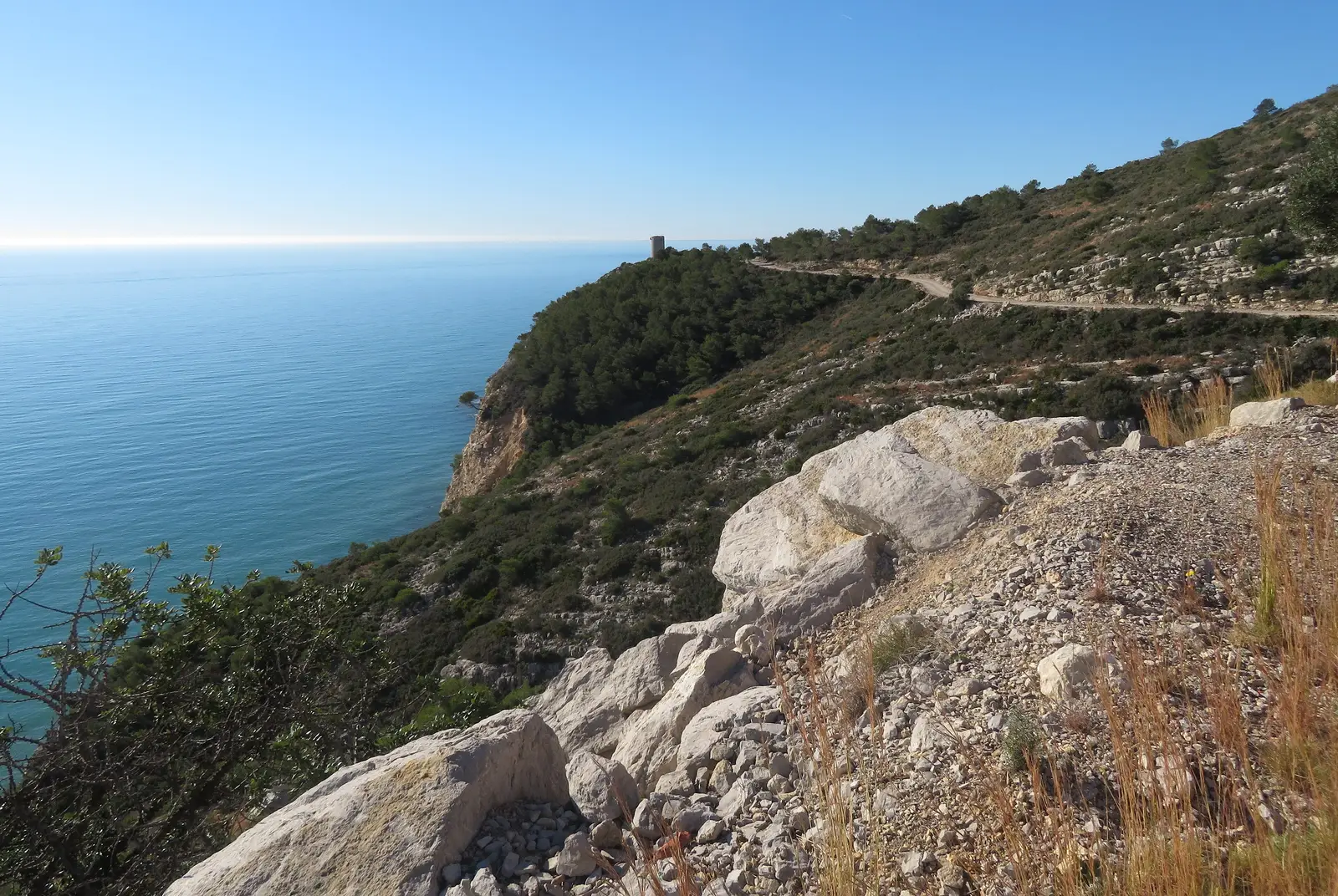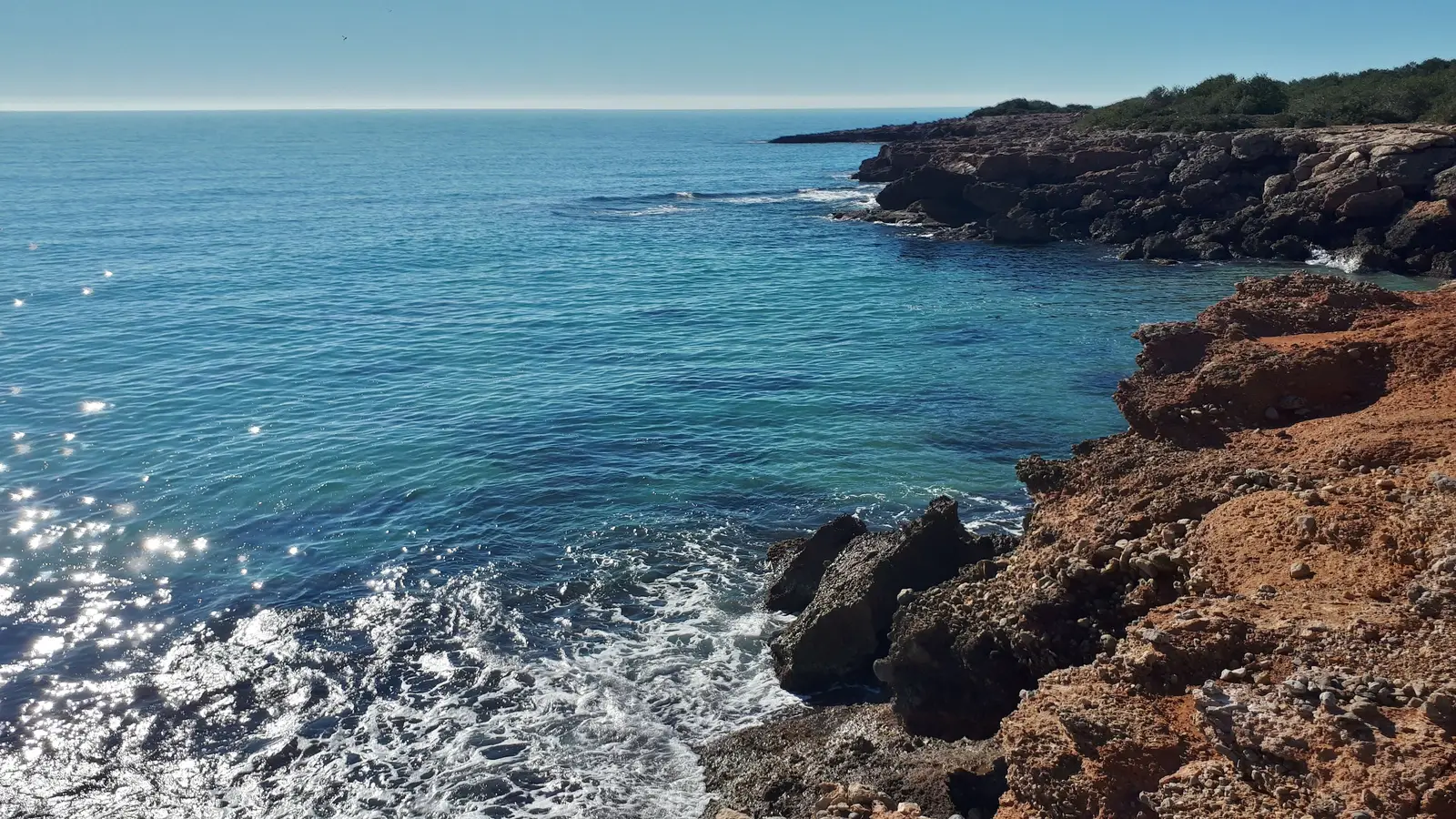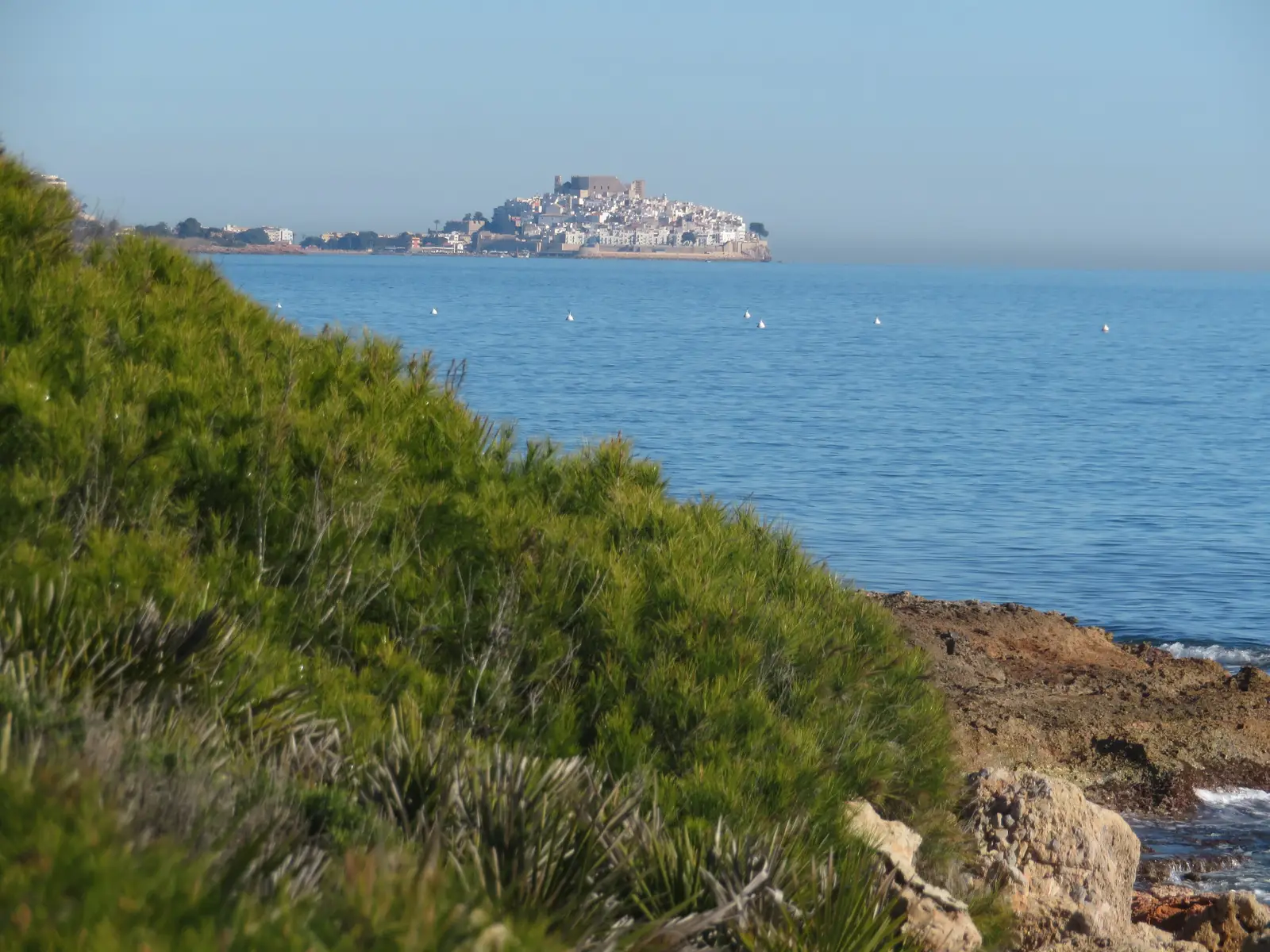
The Serra d'Irta is a coastal range about 20 km long and 7 km wide on average, running north-north-east to south-south-west, which the Valencian regional government has protected as a Natural Park and Marine Nature Reserve since 16 July 2002. The Generalitat considers it "one of the best-preserved coastal ranges in the Mediterranean area".
Official park facts
| Fact | Figure |
|---|---|
| Protection status | Natural Park and Marine Nature Reserve (Decree 108/2002) |
| Management plans | PORN: Decree 78/2001 · PRUG: Decree 4/2007 |
| Land area | 7,743 ha |
| Marine reserve | 941 ha, from the Volante ravine to the Malentivet ravine, down to −20 m (strict reserve down to −10 m) |
| Municipalities | Alcalà de Xivert-Alcossebre, Santa Magdalena de Pulpis and Peñíscola |
| Coastline | Some 12 km, undeveloped |
| Highest point | Pico de Campanilles, 572 m |
| Visitors a year | Between 70,000 and 80,000 |
The sea is protected too: as well as a marine nature reserve, the coastal strip is a marine reserve of fishing interest (Law 16/2003 and Decree 163/2006). That's why spearfishing, shellfish gathering, recreational fishing from boats, anchoring outside designated areas and motorised water sports are all prohibited there.
Hills that plunge into the sea
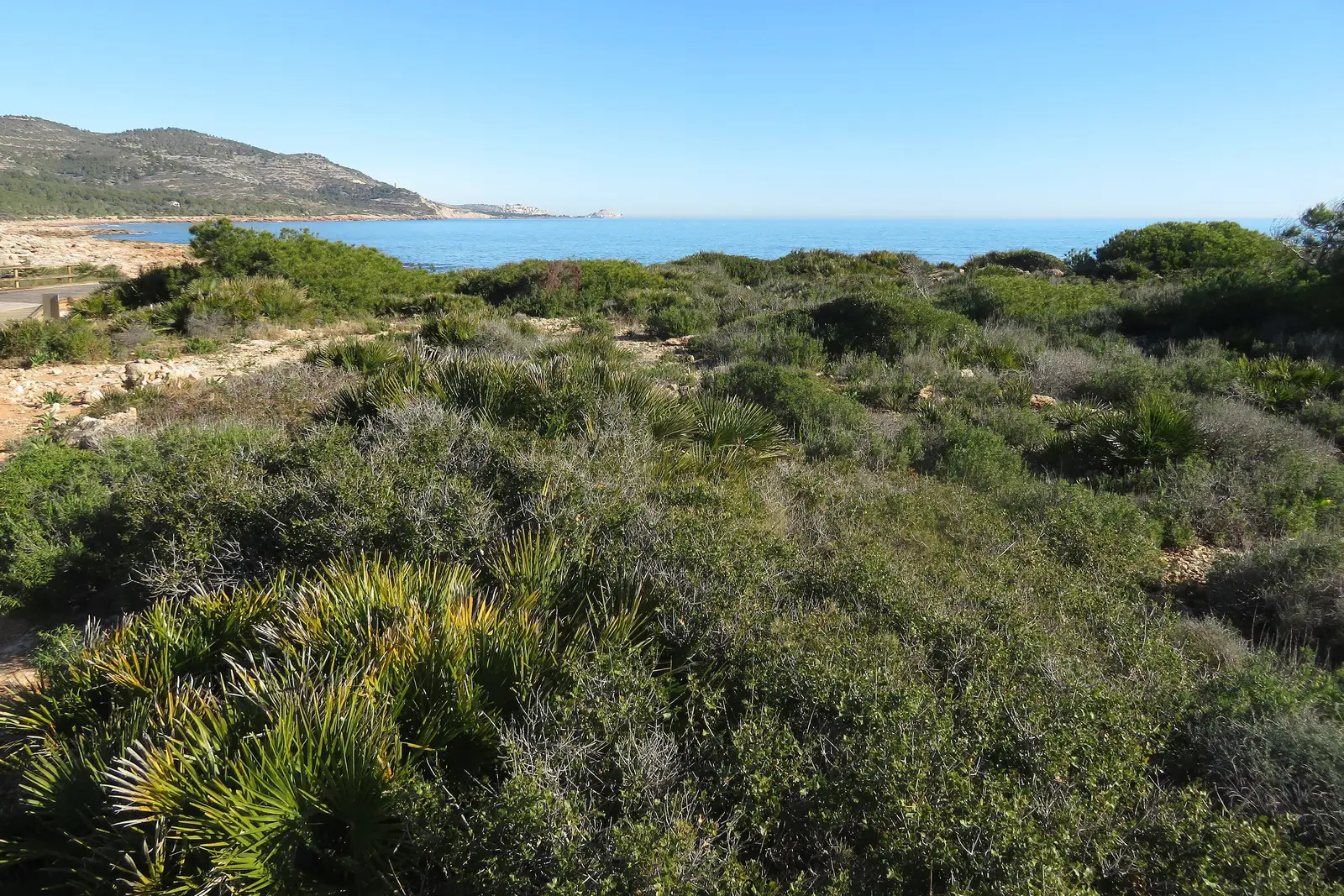
The range rises just a few kilometres from the shore: the summit, the Pico de Campanilles, is about 4 km from the water. That explains the coastal landscape, with cliffs, small pebble coves and stretches of dune. On some beaches, such as El Russo, fresh water even wells up by the shoreline.
Plants: dwarf palms, pine woods and three micro-reserves
The most characteristic vegetation is dwarf fan palm scrub (Chamaerops humilis), Europe's only native palm. Alongside it grow Aleppo pine woods, with mastic, kermes oak and buckthorn, and inland the elm grove of Mas del Senyor survives.
The park contains three plant micro-reserves:
- Cala Argilaga, with the storksbill Erodium sanguis-christi.
- Torre Badum cliffs, with the Peñíscola sea lavender (Limonium perplexum).
- El Pebret dune, with the sea daffodil (Pancratium maritimum).
Wildlife: from Audouin's gull to the red squirrel
Warblers abound in the scrub, and overhead it's easy to spot birds of prey such as Bonelli's eagle, kestrel, buzzard and short-toed eagle. Along the coast live Audouin's gull, a species listed as vulnerable, and the great cormorant. Mammals include red squirrel, wild boar, fox, genet and badger.
Heritage: towers, castles and hermitages
For centuries the Serra d'Irta was a closely watched frontier. Its towers and castles tell that story:
- Xivert Castle: of Muslim origin, from the late 12th century according to the Generalitat; it passed into Christian hands in the 13th century, was altered by the Knights Templar and abandoned in 1609. Remains of the citadel, the outer bailey and the Muslim quarter survive.
- Pulpis (Polpís) Castle: of Arab origin, handed to the Knights Templar around 1277. Its keep is still standing.
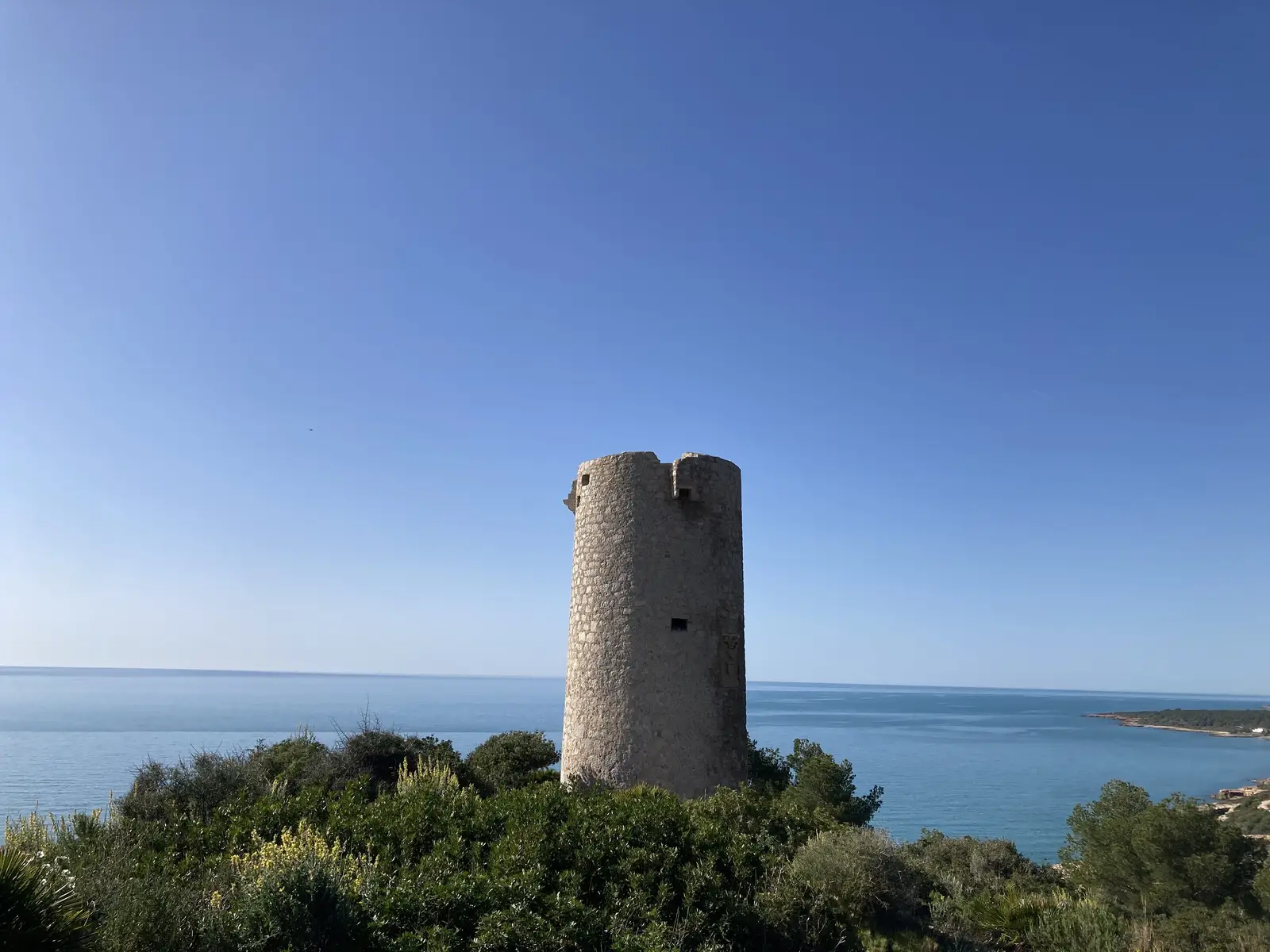
- Torre Badum: a round watchtower, solid up to 6 m, on the second-highest cliff in the Valencia region. It's one of the park's most recognisable images.
- Torre Ebrí: a round tower at 496 m that kept watch for Barbary pirates.
- Santa Llúcia i Sant Benet hermitage: a late-17th-century baroque church 312 m above Alcossebre. Its pilgrimage takes place on 13 December.
- Sant Antoni hermitage, in Peñíscola: 15th century, built over a cave.
- Springs and wells such as Font de la Parra, Font d'en Canes and Pou del Moro.
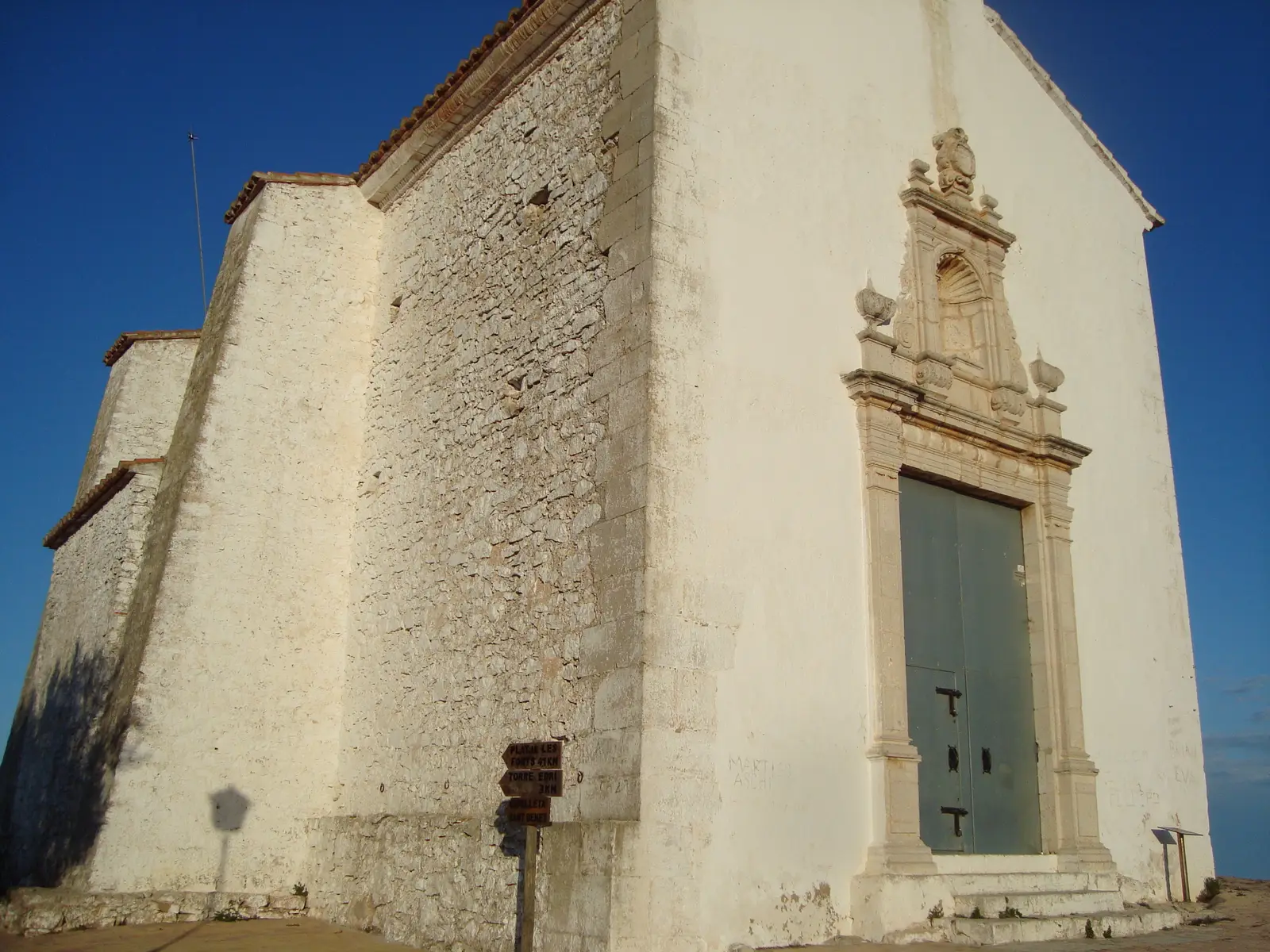
The loveliest way to see this heritage is on foot: almost all the monuments are on one of the park's official routes. The Santa Llúcia hermitage, for example, is just 1.3 km by path from the Montemar estate in Alcossebre.
Rules for enjoying the park
- Fires are prohibited, except in the paella barbecues at the Sant Antoni hermitage picnic area when they're not sealed off.
- Wild camping is not allowed.
- On the tracks, the speed limit is 30 km/h and pedestrians have priority. Quad bikes, trikes and ATVs are prohibited.
- In summer, driving onto the coast requires a parking booking: we explain it in getting there.
Visitor centre
The park's visitor centre is in Peñíscola (Avda. Estación s/n, on the CV-141, km 1.5), not in Alcossebre. In Alcossebre you can get information and maps at the Tourist Info in Plaza Vistalegre or at Romana, which are partner information points for the park. Opening hours change with the season: check them on the official park website before you go. If you enter the park from the Peñíscola side, hotelpeniscola.com has a guide to the Serra d'Irta from Peñíscola, including the Torre Badum (in Spanish).