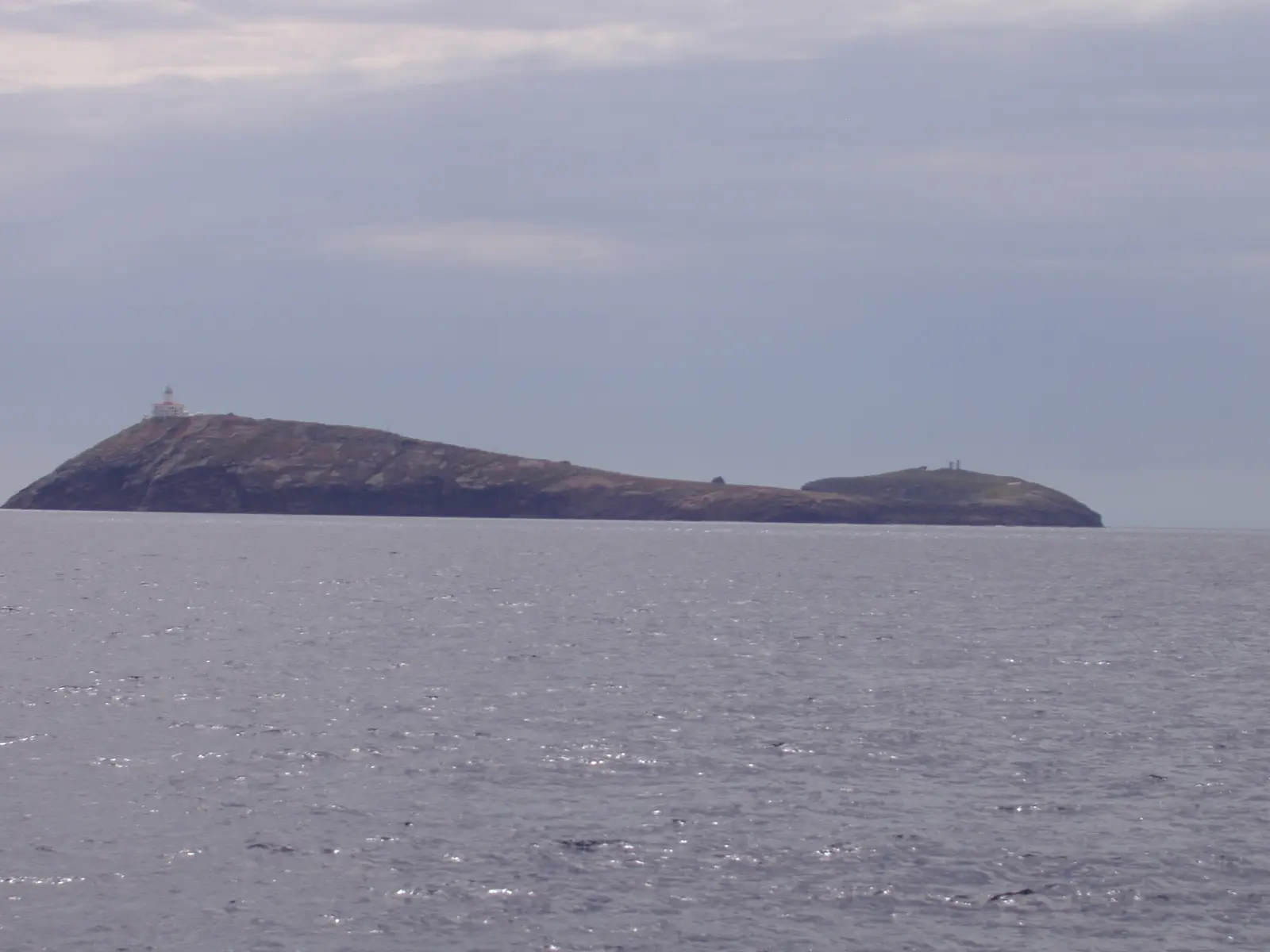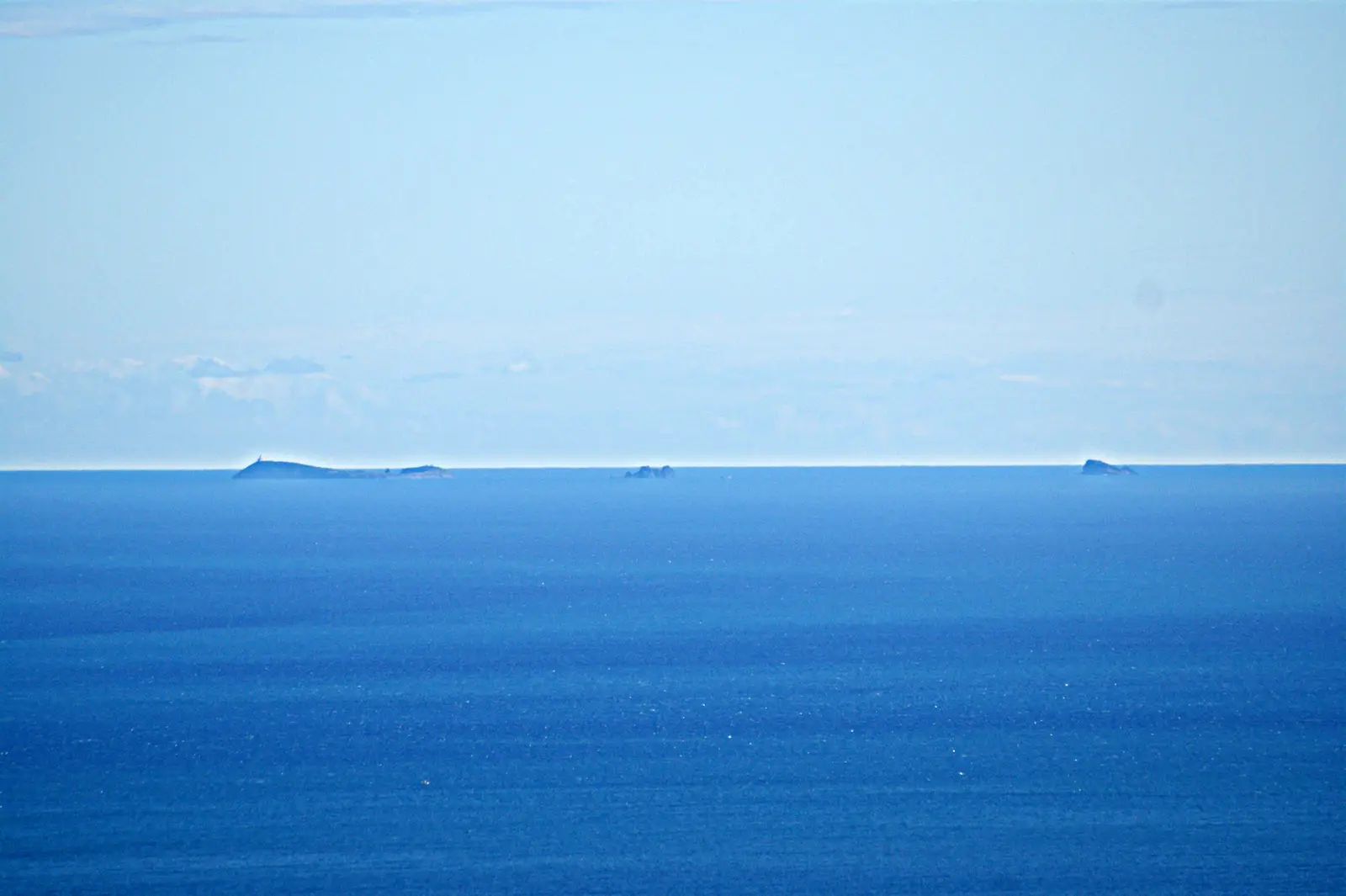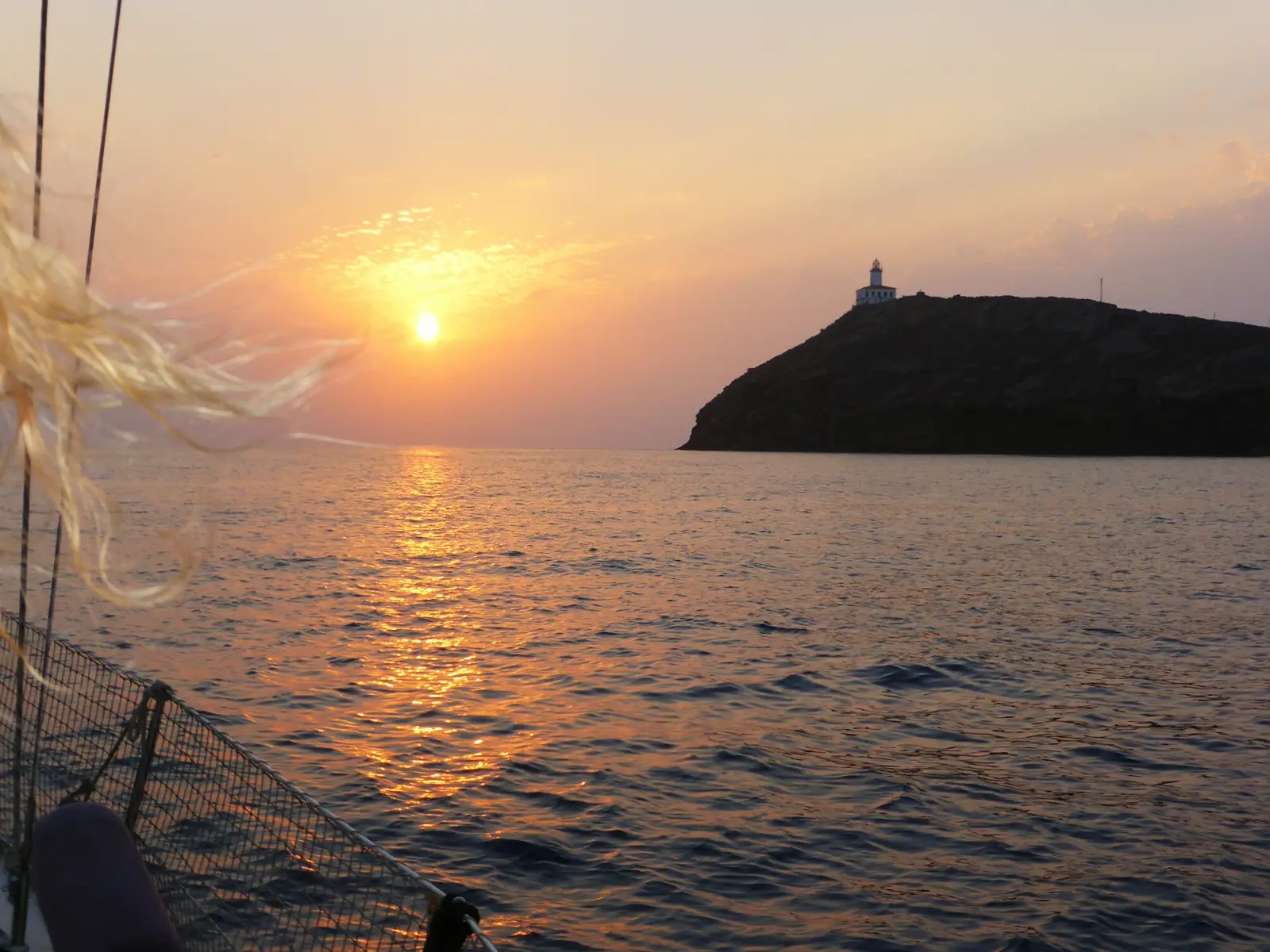
The Columbretes Islands (in Valencian, Illes Columbretes) are a group of islets of volcanic origin in the middle of the Mediterranean, off the coast of Castellón. They have no inhabitants: only the reserve's wardens and, at times, researchers live on the largest island. From Alcossebre you get there by boat, on a full-day trip, and it is one of the most unusual outings on the coast.
What the Columbretes Islands are
It is an archipelago of 19 hectares above water, 14 of them Illa Grossa, the largest island and the only one you can visit. It is surrounded by a wide marine reserve of more than 5,000 hectares. They have belonged to the municipality of Castelló de la Plana since 1955; they are not part of Alcalà de Xivert, even though the trip sails from Alcossebre.
Types of protection
Terminology matters, because names get mixed up:
| Status | What it is | Detail |
|---|---|---|
| Nature Reserve | Protects the land part | Reclassified in 1994 by Law 11/1994 on the protected natural areas of the Valencian Community; the master plan was approved by Decree 107/94 |
| Natural Park (historical) | Earlier status of the land part | Declared in 1988 (Decree 15/1988). The Generalitat keeps "natural park" in the name of its visitor website |
| Marine Reserve of Fishing Interest | Protects the sea | Ministerial Order of 19 April 1990; managed by the General Secretariat for Fisheries of the Ministry of Agriculture, Fisheries and Food |
| Natura 2000 network | European | Site ES0000061, "Àrees emergides de les Illes Columbretes". In June 2025 the Council of Ministers also approved two marine Special Areas of Conservation around them |
So, even if you find "Columbretes Islands Natural Park" in many guides, the exact name today is Columbretes Islands Nature Reserve (land part) and Marine Reserve (the sea).
Where they are and how far
They lie in the Mediterranean, 28 nautical miles from Cape Oropesa (about 52 km) and about 30 from the Grao de Castellón, according to the Ministry of Agriculture, Fisheries and Food. The company that runs the trip from Alcossebre speaks of about 27 nautical miles (about 50 km). The Generalitat says that from the port of departure it is "about 50 km, normally 2 to 3 hours by motor launch".
The islands of the archipelago
There are four groups of islets, plus rocks and shoals. The Generalitat and the company in Alcossebre use the Valencian names; in brackets, the Castilian form:
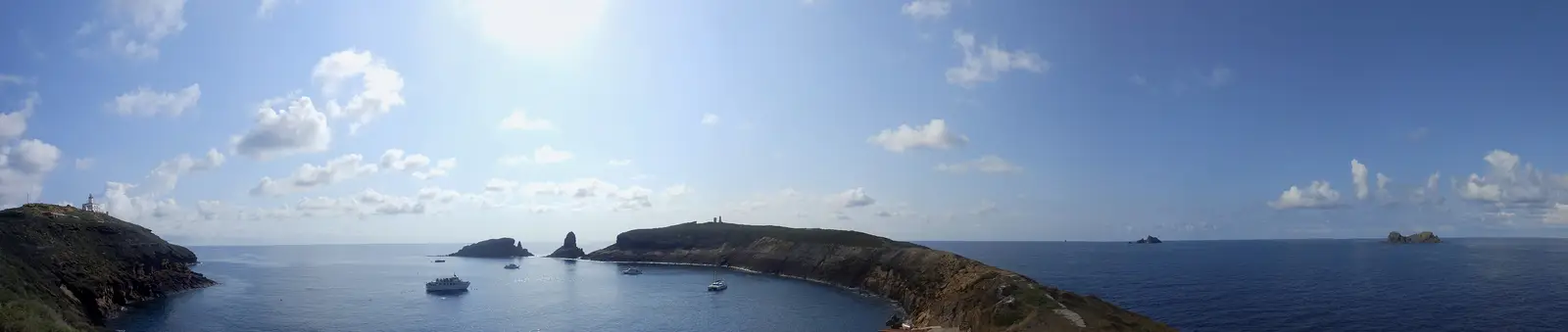
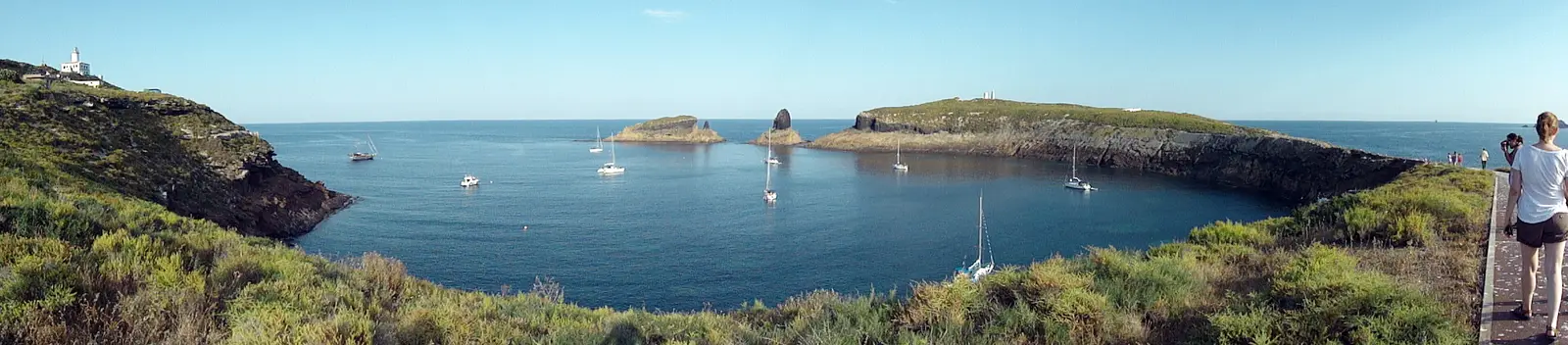
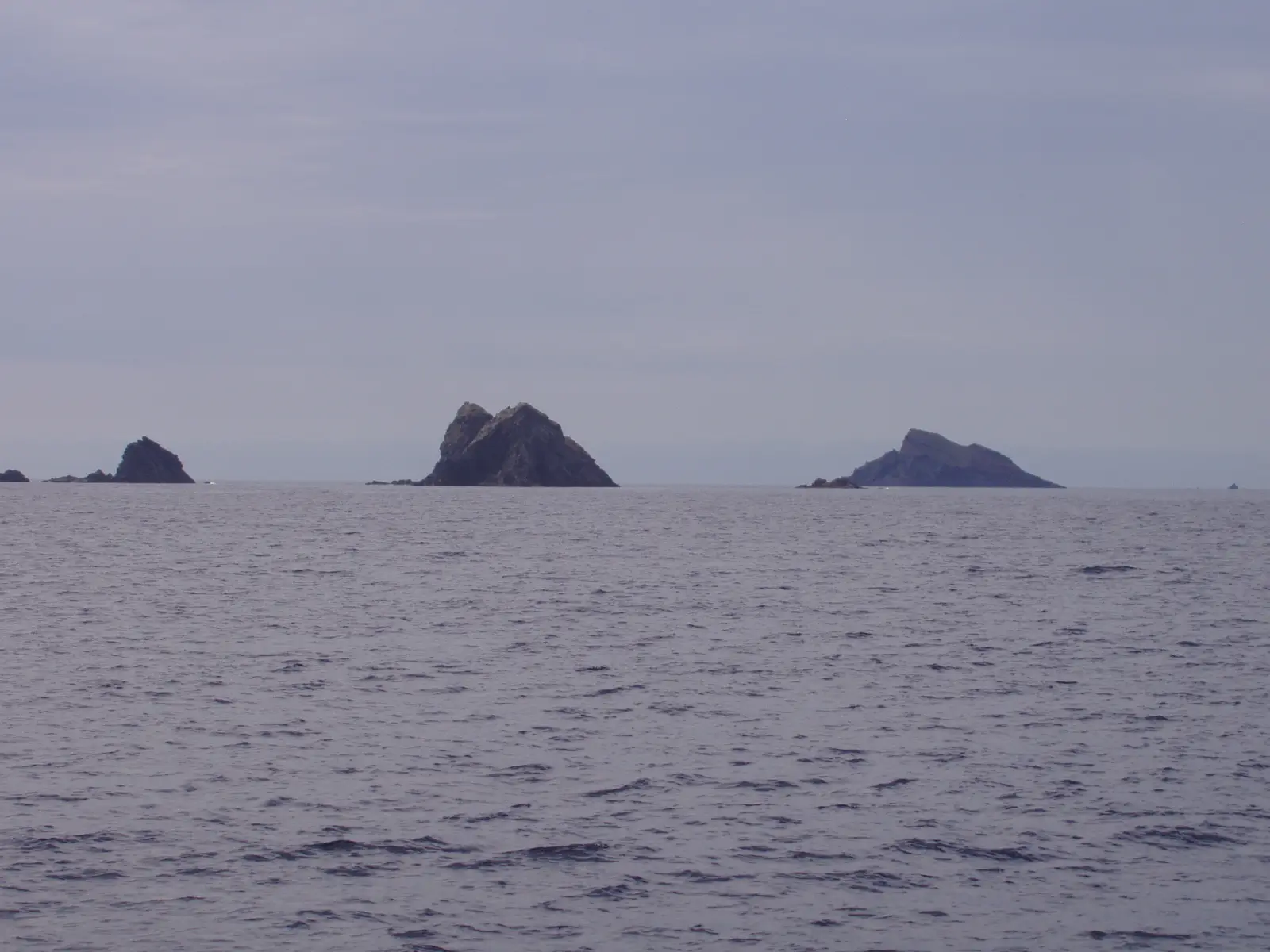
- Illa Grossa (Columbrete Grande): the largest, 14 ha and 67 m at its highest, also the highest point of the archipelago. It is crescent-shaped, and on it stand the lighthouse, the Puerto Tofiño landing stage and the reserve's facilities. It is the only one where you can land.
- La Ferrera (Malaspina): saddle-shaped.
- La Foradada (Horadada): it has an arch that gives it its name.
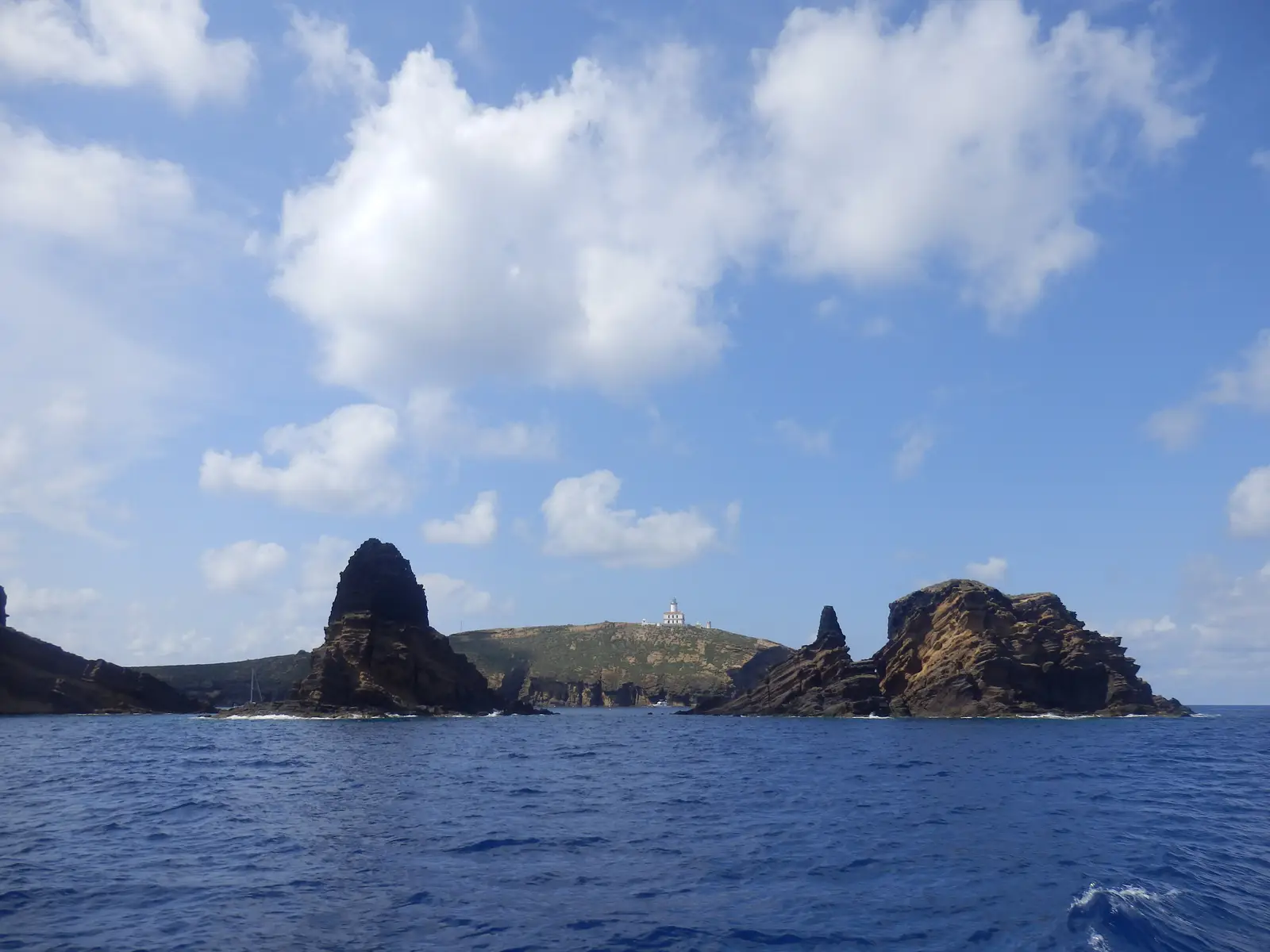
- El Carallot (Bergantín): what remains of a volcanic chimney, surrounded by a full reserve.
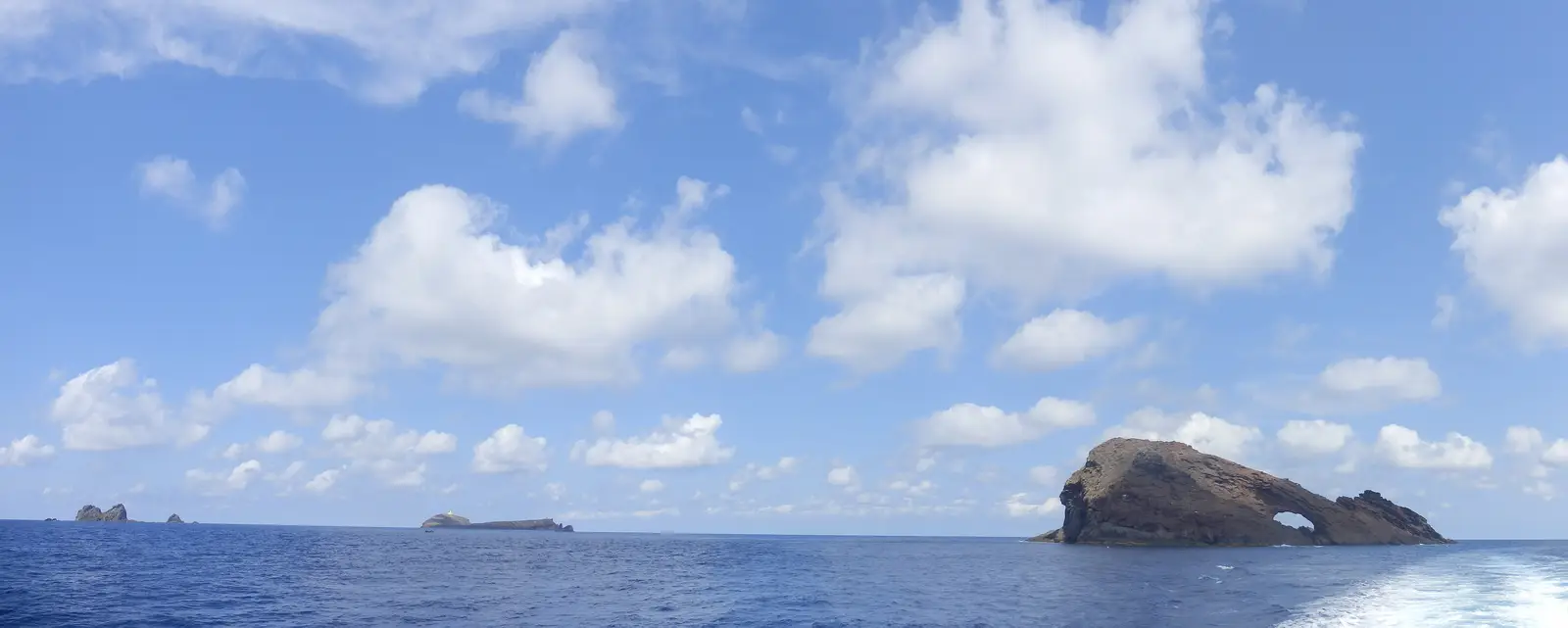
Around Illa Grossa and El Carallot there are full reserves, where no plants or animals may be taken.
A volcanic archipelago
The Columbretes were born from submarine eruptions in the Quaternary period, linked to a subduction zone. Technical and popular sources do not agree on the exact age: they speak of a formation between several hundred thousand and a few million years ago.
The crescent of Illa Grossa is interpreted, according to popular sources, as the rim of an old crater with an inner bay; the Generalitat's official route does not mention it, but the shape is easy to make out as you arrive by boat. El Carallot is what is left of a volcanic chimney, and the Generalitat describes lava formations and a volcanic plug along the route. Underwater, the relief continues with steep walls, caves and detrital and maërl bottoms.
History of the archipelago and its lighthouse
- Ancient times: there are references from Greek times, and Roman amphorae have been found. After that, for centuries, the islands were a refuge for sailors, corsairs and smugglers: the Cova del Tabac, a cave on Illa Grossa, recalls tobacco smuggling.
- 1831: the British captain Smyth took the first coordinates and made the first detailed description.
- 1856-1859: the Illa Grossa lighthouse is built, inaugurated in 1859. The lighthouse keepers were its only inhabitants for more than a century.
- 1895: visit by Archduke Ludwig Salvator of Austria, who left studies of the geology, fauna and flora and of the keepers' life.
- 1975: the lighthouse is automated and the last keeper leaves.
- Until 1982: the islands were used as a military firing range, until it stopped at the request of the Diputación de Castellón.
- 1987 and 1992: surveillance of the reserve in summer since 1987 and all year round since 1992. Today the wardens live on the island.
Land flora and fauna
The island is covered in sea-blite (Suaeda vera), and among its plants there are two endemic species: the Columbretes sea cress ("mastuerzo marino de Columbretes") and the Columbretes tree medick. Dwarf fan palm, tree mallow and rough bindweed also grow here, along with prickly pear, which is introduced.
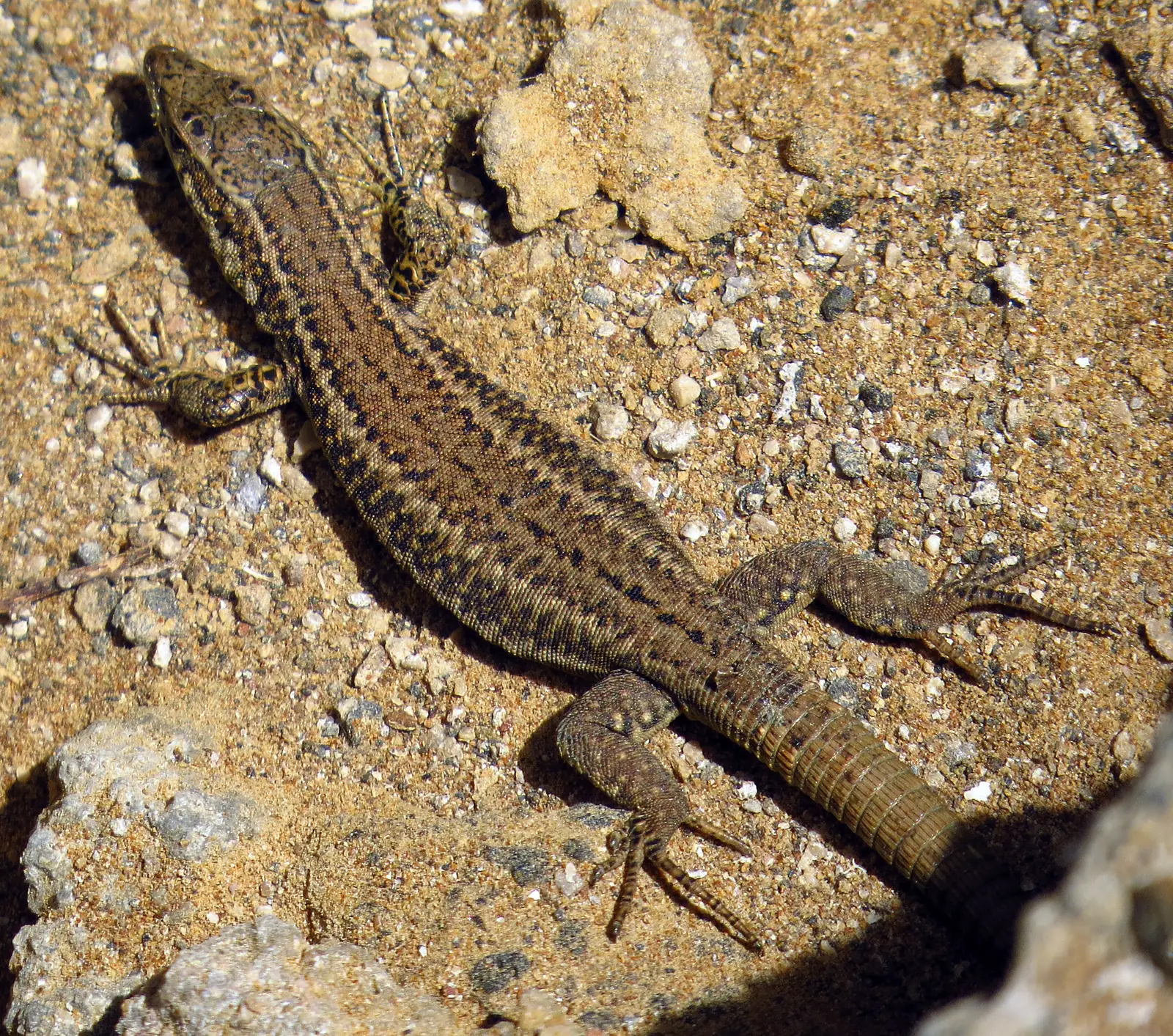
The best-known animal is the Columbretes wall lizard (Podarcis atrata), endemic to the archipelago: it lives nowhere else. Alongside it are the snail Trochoidea molinae and about ten exclusive insects, mostly darkling beetles.
Birds
The Columbretes are a breeding and stopover site for seabirds. The nesting species include Audouin's gull, the yellow-legged gull, Cory's shearwater, the European storm petrel, the Mediterranean shag, the peregrine falcon and Eleonora's falcon, which can be seen between August and October. The official sources speak of large numbers of passing birds but give neither figures nor migration dates, so we do not give any either. From the lighthouse's north esplanade, the Generalitat recommends scanning the sea in spring and autumn in case cetaceans pass by.
The marine reserve and its seabed
The Ministry describes seabeds of steep walls, caves, and detrital and maërl bottoms. The species that characterise the reserve include the grouper, the European spiny lobster (the reserve's emblematic species), the red and white gorgonian and the brown alga Laminaria rodriguezii, as well as Cymodocea nodosa meadows. There is no Posidonia, because the archipelago is geologically recent. Dolphins, turtles and the sunfish can be seen as visitors. Seeing them depends on the day and cannot be guaranteed.
The guided visit to Illa Grossa
It is the only possible visit on land and it is always guided by the reserve's staff. It leaves from the Puerto Tofiño landing stage, follows the old lighthouse path and climbs to the lighthouse, where the visitor centre is. It lasts about 1 h 30 min, is 1.4 km there and back and climbs 67 m, with an initial stretch of roughly 32% gradient. The Generalitat recommends it in spring and summer, and avoiding the hottest days. These are its seven stops:
- Las Escalas viewpoint: views of El Carallot, La Foradada and La Ferrera; cemetery and statue of the Virgen del Carmen.
- Escala del Rossí: birdwatching, such as Eleonora's falcon and Cory's shearwater.
- Las Casernas viewpoint: barracks from 1856, endemic lizards and snails.
- Cistern cut into the rock: of about 45,000 litres, still in use.
- Cova del Tabac: the smugglers' cave.
- South esplanade of the lighthouse: the bay and the islets, and the history of the lighthouse.
- North esplanade of the lighthouse: another cistern, the Valencian coast and, in spring and autumn, possible cetaceans.
Visiting rules
They are set by the Generalitat for the land part:
- You can only land on Illa Grossa, at Puerto Tofiño and with the reserve's staff. You may not land without their permission.
- There are daily and monthly quotas and timetables set by the annual public-use resolution; visits are organised by high, medium and low season, and take place only between 2 hours after sunrise and 2 hours before sunset.
- The staff can change or cancel the visit depending on the number of visitors, the weather or other circumstances; landing depends on the state of the sea.
- Forbidden: camping, bringing pets, taking soil or rock samples, smoking or lighting fires, leaving litter and eating during the visit (you eat on the boat). You must always stay on the marked path, in small groups and without making noise.
- In the water: snorkelling does not require a permit, but you may not stand on or hold on to the rocks, or damage the seabed. Scuba diving requires authorisation for a specific date, and fishing is regulated and needs specific authorisation.
Season and accessibility
Interpretive visits are closed from December to February. The Generalitat recommends visiting in spring and summer. The company in Alcossebre publishes a calendar of places from March to October.
The visit is not advisable for people with reduced mobility: the path to the lighthouse has a very steep stretch and there is no alternative.
What to bring
- Water and your own food, because you cannot eat on the island and the Barracuda trip does not include a meal.
- Sun cream (preferably eco-friendly), sunglasses and a cap: the whole way to the lighthouse is in the sun.
- Comfortable shoes for a path with a slope.
- Swimsuit, towel and, if you want to snorkel, mask, snorkel and fins.
- A light jacket for the crossing.
- Something for seasickness: the Generalitat recommends preventing it and travelling in the ventilated areas of the boat. Ask a pharmacist.
How to get there from Alcossebre
The Barracuda Buceo trip, a company authorised under the Parcs Naturals brand, leaves from the Puerto Deportivo Las Fuentes. Timetables, the price checked on 20/11/2026, conditions and alternatives from Castellón and Valencia are in the guide to the boat trip.
The reserve's information centre
The information centre is not on the islands but at the Planetari de Castelló (Paseo Marítimo 1, Grao de Castellón): phone 96 437 64 00 and 679 19 63 10, email parque_columbretes@gva.es. Opening hours are not given as text on the official website, so check them before you go.
Where to stay
The Marcomar Apartments, in the Marcolina development in Alcossebre, at the entrance to the Serra d'Irta, are a quiet base for the day before and the day after the trip. You can see everything around Alcossebre in the guide to the three natural areas.
Would you dare to cross?
Have you ever been on an island with no inhabitants and no noise other than the gulls? What would you most like to see first: the lighthouse, the lizard or the islets from the boat?