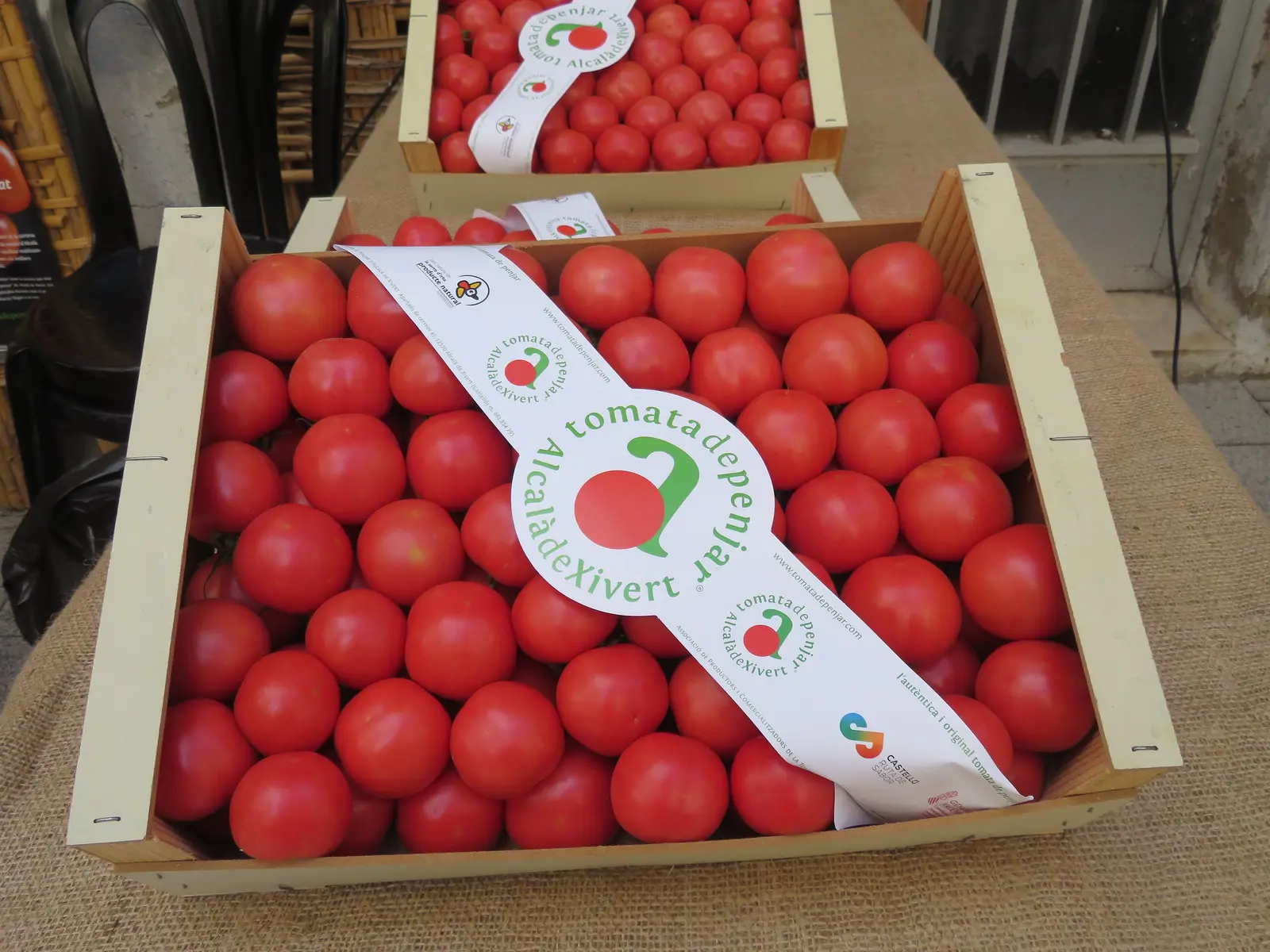
Travelling slowly also means eating what the land produces. Around the Serra d'Irta stretch the dry farmlands of Alcalà de Xivert: terraces of olive and almond trees, vegetable plots and a product with a name of its own, the tomata de penjar. If you're staying in an apartment, you can shop at the market in the morning and cook at home with views of the hills.
Tomata de penjar d'Alcalà de Xivert
The tomata de penjar is a local "hanging" tomato variety that has been grown in Alcalà de Xivert for more than a century. It's hung up in bunches so it keeps for months. The varieties grown are Estrella, Punteta and Moradeta.
It has held the Generalitat's CV Quality Mark since 2008, managed by the ALCALAX producers' association, and carries the Castelló Ruta de Sabor and Marca Parcs Naturals de la Comunitat Valenciana labels. The simplest way to try it is rubbed on bread with olive oil and salt.
The Fira de la Tomata de Penjar
Every October, for one weekend, Alcalà de Xivert holds the Fira de la Tomata de Penjar on the church square: stalls of artisan and locally grown produce, and menus starring the tomato at restaurants in Alcalà and Alcossebre. The dates change every year: check them with Alcossebre's official tourism office.
Olive oil and ancient olive trees
Olive oil is one of Alcalà de Xivert's traditional products, along with almonds. And less than an hour to the north is one of the great olive landscapes of the Mediterranean: the Territori del Sénia, between northern Castellón and southern Tarragona, where thousands of ancient olive trees have been catalogued, several of them more than 1,000 years old according to a study by the Technical University of Madrid.
- Their oil is sold under the Aceite Farga Milenaria guarantee mark, which certifies oil from monumental olive trees of the Farga variety.
- You can see ancient olive trees, for example, next to the Misericòrdia hermitage in Vinaròs or at the Arión Museum in Ulldecona.
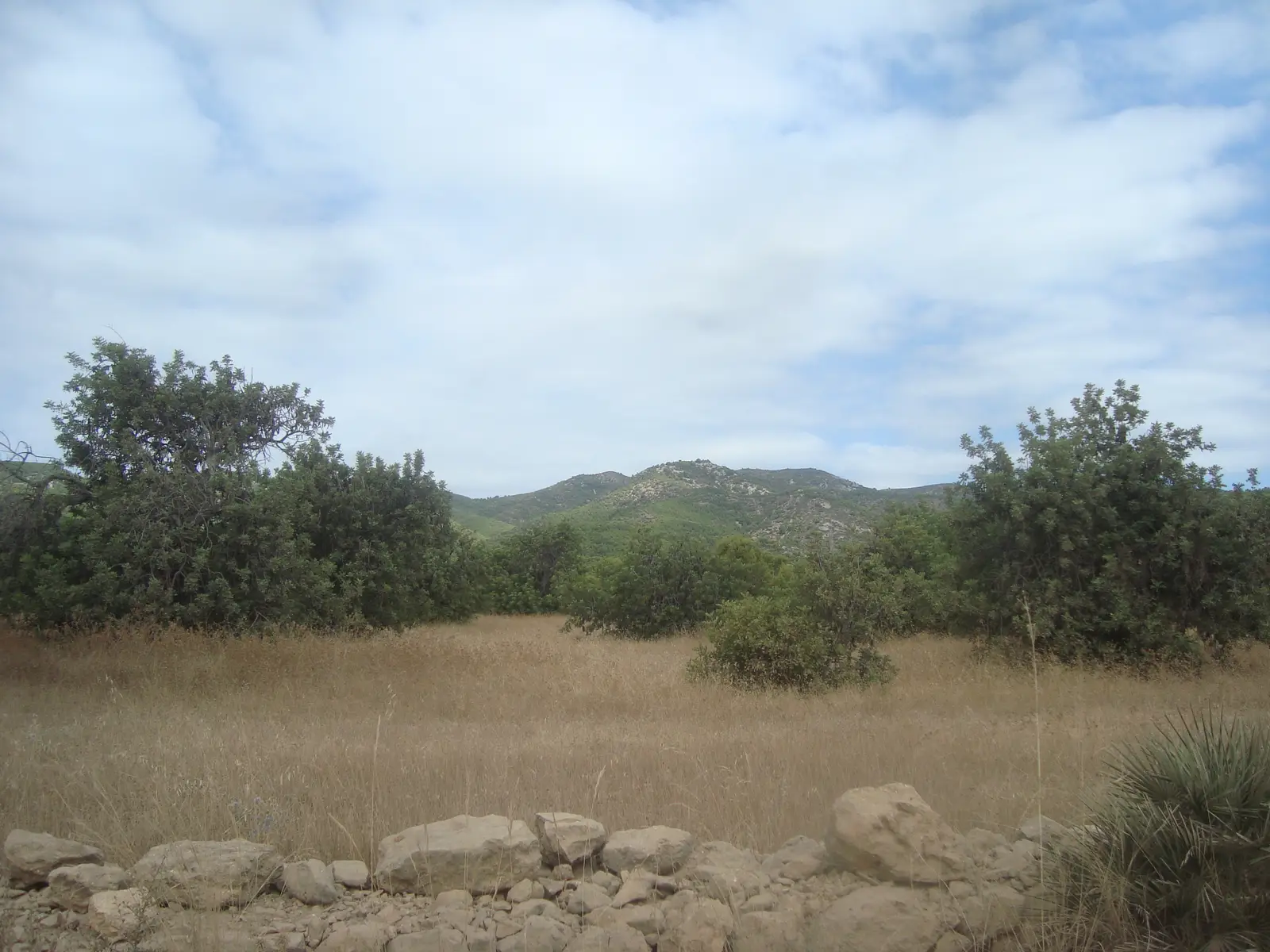
It makes a perfect half-day trip for a day away from the beach. In the Serra d'Irta itself, the carob groves with their dry-stone walls are a reminder that this has always been dry-farming country.
Almonds, borage, artichokes and sweets
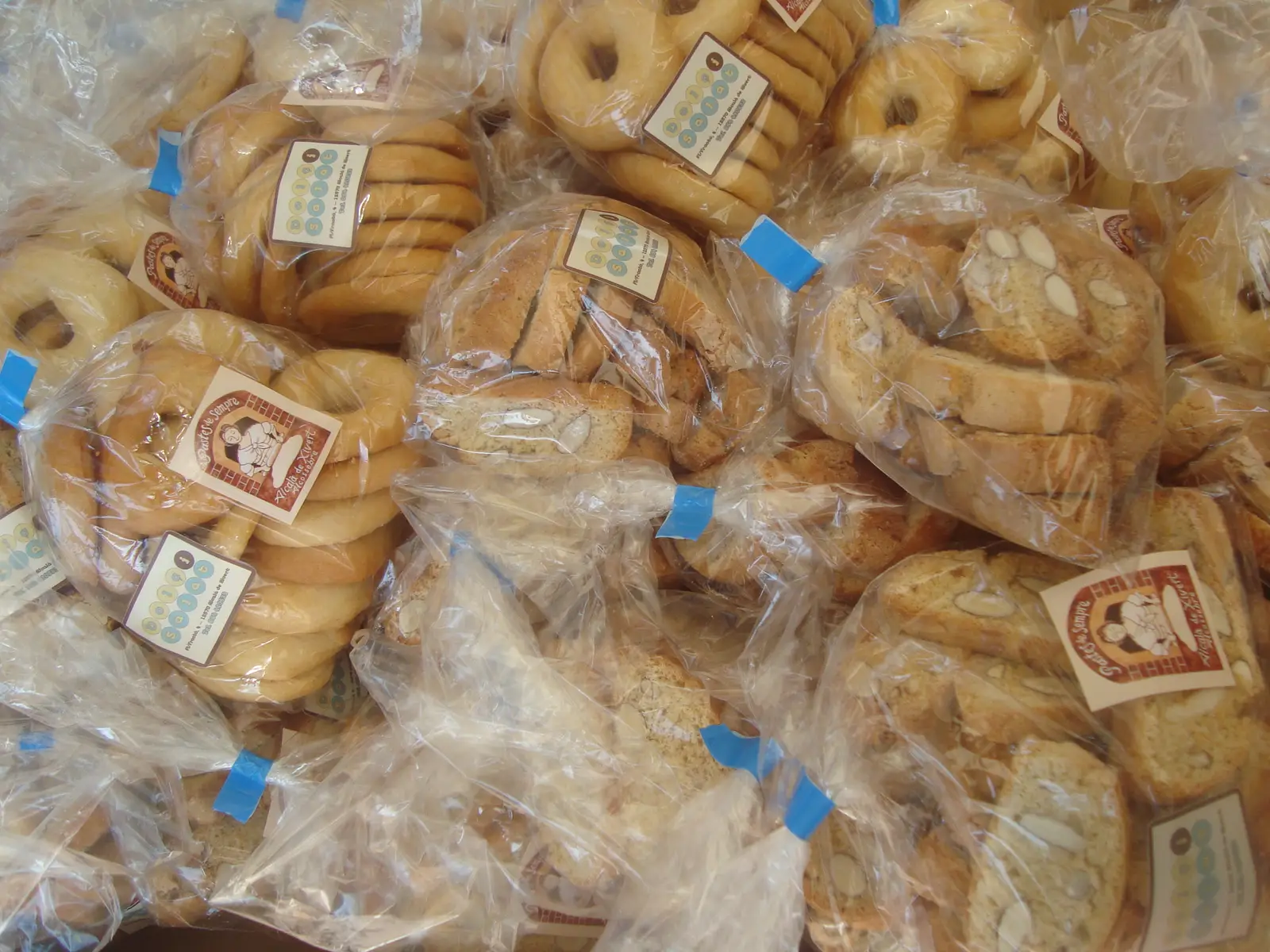
- Almonds: the basis of the town's traditional sweets: pastissets, carquinyols, rosegons and almendrados. They make the perfect souvenir to take home.
- Borage and artichokes: seasonal vegetables from Alcalà's market gardens.
- Olive oil: a must on any table in the area.
Where to buy local produce
| Market | When | Where |
|---|---|---|
| Alcalà de Xivert market | Fridays 9 am to 1 pm, all year | Pl. Ricardo Cardona, C/ San Fernando and C/ del Peso |
| Alcossebre market | Tuesdays 5 to 9 pm, May to October | Camí l'Atall, seafront promenade area |
Approximate times according to Alcossebre's official tourism office.
A picnic in the hills, without fire
If you take lunch into the hills, remember that lighting fires is banned in the park: the only exception is the paella stoves at the Sant Antoni hermitage picnic area, in Peñíscola, when they're not sealed off. A sandwich of bread with tomato and olive oil, some almonds and water are all you need for a walk. Take your rubbish back with you.
A slow weekend in the Serra d'Irta
- Friday: Alcalà de Xivert market in the morning and a walk up to the Santa Llúcia i Sant Benet hermitage in the afternoon.
- Saturday: sunrise at the Alcossebre lighthouse, the red route along the coast and a swim at Cala Mundina; lunch in the apartment with what you bought at the market.
- Sunday: a trip to the ancient olive trees of the Territori del Sénia.
If you'd rather someone else did the cooking, Alcossebre has restaurants serving rice dishes and fish by the sea.
Cook what you buy, at the foot of the hills
The Marcomar apartments have a fully equipped kitchen and a terrace with sea or mountain views: the easiest way to enjoy local produce at your own pace, a few minutes from the park entrance.